
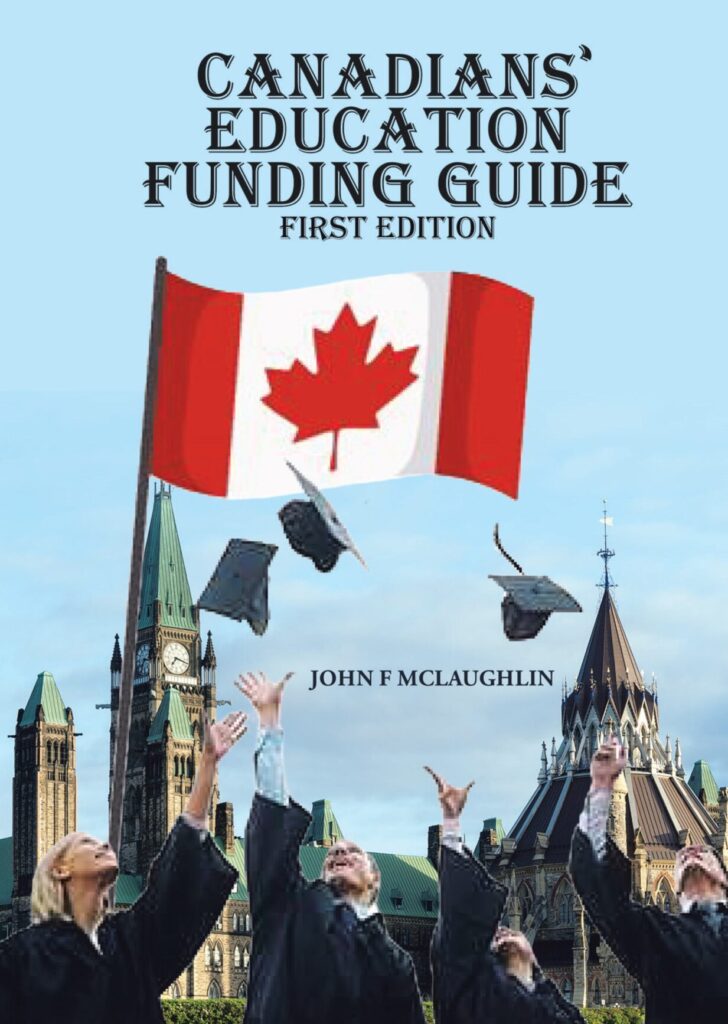
Canadians' Education Funding Guide provides 85 funding sources including RESPs, scholarships, grants, loans, employment and accommodation options, for both youth and adults' lifelong learning
Newsletter
By the end of 2026, Canadian GRADS will start issuing a quarterly newsletter so subscribers can stay informed about:
- The latest rates, income thresholds and other eligibility criteria for the 50 federally-sponsored funding sources in the book, such as the RESP.
- Planned changes as announced by the federal government for any of their 50 funding sources.
- Updated key hot links.
While the newsletter is intended to keep book purchasers up-to-date, any Canadian is welcome to become a subscriber at this time Subscriptions are free until the end of 2027. If you wish to become a subscriber submit your email address below
Plan for Post-Secondary Education with Confidence
Paying for post-secondary education in Canada has become increasingly complex. Between rising tuition costs, RESPs, scholarships, grants, loans, tax strategies, and dozens of funding programs, many families don’t know where to begin. The Canadians’ Education Funding Guide brings everything together in one comprehensive Canadian resource to help you make informed financial decisions. It is based on over four decades of research and identifies 85 funding sources with more than 700 curated links to trusted organizations, government programs, and specialists.
Whether you’re saving for a young child, preparing for university in the next few years, returning to school as an adult, or helping clients navigate education funding, this guide provides practical, unbiased advice in plain language. You’ll learn how different funding options work together, compare their benefits, and create a personalized education funding plan using the included DIY worksheets and planning tools.
If your goal is to reduce the cost of education, maximize available funding, and build a strategy that fits your family’s situation, this guide was written for you.
85+
Funding Sources across Canada
700+
Curated Links to Trusted Programs and Resources
Who this guide is for
Whether you’re planning years in advance or preparing for an upcoming school year, this guide helps Canadians understand their education funding options.

Parents
Plan ahead for your children's education with strategies covering RESPs, scholarships, grants, tax considerations, and long-term funding plans.

Grandparents
Learn how to support your grandchildren's education in the most effective and tax-conscious way.

High School & Post-Secondary Students
Discover scholarships, bursaries, grants, loans, employment-based funding, and other ways to reduce education costs.

Adults Returning to School
Find funding options for career changes, lifelong learning, professional recertification, veterans, newcomers to Canada, and mature students.

People with Disabilities & Indigenous Students
Explore funding sources specifically available to help remove barriers to higher education.

Financial Professionals & Educators
A valuable reference for financial planners, accountants, advisors, educators, guidance counsellors, government staff, and others helping Canadians plan for post-secondary education.
What the book will give you
Mission
Closing the poverty gap and inequality in education access by reducing funding barriers.
Canadians’ Education Funding Guide will be the #1 choice for information, guidance and related services for Canadian parents, grandparents, students, lifelong learners, educators and financial service providers seeking RESP planning, education funding strategies, Canadian student grants, scholarships and other ways to pay for post-secondary education.
We will reduce funding barriers to improve access to higher learning. Clients will be able to easily access all the latest information they need on this subject, when they want it, where they want it, and how they want it. Since much of the information changes regularly, Canadians’ Education Funding Guide will provide the guidance and resources for clients to monitor and update their education funding plans.
Our Vision
All Canadians, regardless of age, income or status will be able to reach their potential through post-secondary education.
About the Author
Through higher education, I escaped poverty to exceed many personal and career goals. I want to share my wisdom to help others achieve their dreams. This is my story.
Endorsements
Frequently Asked Questions
`Registered Education Savings Plan, the government of Canada’s primary program to help families save for post-secondary
No, the paperback and hardcover versions are available to purchase on Amazon, and soon will be in some bookstores and libraries. Interested parties can request their local library stock the book.
By the end of 2026, the digital version will be available at a large discount compared to the print versions.
The Canadians’ Education Funding Guide is designed for anyone planning or supporting post-secondary education in Canada. Whether you’re saving for a child’s future, preparing for college or university, returning to school yourself, or helping others navigate education funding, this guide provides practical, unbiased information to help you make informed decisions.
It is especially valuable for:
- Parents and grandparents planning for a child’s education
- High school and post-secondary students
- Adults returning to school or changing careers
- Indigenous students and people with disabilities
- New Canadians seeking education or professional recertification
- Educators, guidance counsellors, and financial professionals supporting students and families
No matter your age, income, or stage of life, the guide helps you understand your options, compare funding sources, and build a personalized education funding plan with confidence.
Yes, in the body of the book the section on Scholarships and Bursaries is 5 pages providing the best search engine’s for Canadian scholarships, application tips and more. One of the appendixes provides the author’s list of co companies, foundations and organizations that provide scholarships and bursaries to Canadian.
A total of 85 funding sources, the most comprehensive collection you will find:.
For the general population – 57 sources
For adults’ lifelong learning – 12 sources
Exclusive to indigenous peoples – 3 sources
Exclusive to people with disabilities – 12 sources
The eligibility and benefit amounts for all (50+) government programs is current June 30, 2026. All web links were valid as of March 31, 2026.
The author has a master’s degree in planning and s a lifelong learner and former management consultant specializing in comprehensive feasibility studies to support capital investment decisions by a wide range of large corporate and government clients. He is an expert in financial modeling using EXCEL.
Since his first child arrived in the 1980’s, he continually researched and documented options to fund post-secondary education, which became the backbone of the book..
John has hands on experience with 15 of the funding sources, having funded the post-secondary education of three generations of family, and providing pro bono advice to countless family and friends.
- Convince Canadians that post-secondary education is a key to career success.
- Clearly demonstrate the cost structure and escalation trends for post-secondary education
- Inventory and present all known, legal options (85) in Canada for funding one’s post-secondary education, including non-conventional means.
- Encourage readers to develop education funding plans for family members.
Provide guidance on creating and implementing education funding plans. - Link readers to resources and experts to help them finalize and implement their education funding plans.
Yes, all funding sources are applicable to Quebec, plus one chapter is dedicated to how any of these sources are different in Quebec.
- Comprehensive – There are 85 funding sources; competitors contain 20-30 sources.
- Canadian – Written by Canadians, for Canadians only, whereas most information published on this topic Is for the USA and not applicable to Canada.
- Equitable – No matter your age, circumstances, challenges, there is help for you.
- Objective – Written by an independent, unbiased party with no self-interest.
- Practical – It provides the framework and DIY tools for planning and implementing.
- Digital – Over 700 web links to provide convenient and quick access to the resources and experts needed to finalize and implement an education funding plan.
- Grounded – Blends theory with practical guidance and real-life experience.
Simple – Written in plain English, definitions and acronyms are explained. - Current – Research is current to March 31, 2026, and will be updated before publishing.
- Longer Shelf Life – The useful shelf life of both print and digital versions is significantly longer than competitors because:
- Hyperlinks built into the text take allow the reader to connect to sources,
- Hundreds of weblinks connect the reader to sources, resources, and experts.
- While readers with a print version do not have the ability to use the weblinks with just a click, all URLs are typed out for them to recreate in a browser.
- An appendix outlines government funding sources where one or more parameters could change over time, (e.g. program eligibility based on family income), and the appendix provides a direct hotlink/URL to the responsible department.
Starting in Grade 3, when his report card said, “Hook Your Wagon to a Satellite”, John embraced education as the great equalizer. This passion fueled his desire to escape the poverty and menial labor associated with his family’s farm, through education. That fire is still aglow today, as he shares his deep knowledge on funding post-secondary education with fellow Canadians.
Anyone can create an Education Funding Plan for themselves, a family member or client using the DIY tool kit. All you need is printer, pencil, calculator and internet access to create a print version. A free digital version will soon be available to download from the author’s website
The poverty gap and inequality in education access
- By educing funding barriers. Funding barriers include but are not limited to:
- Ever-increasing costs for post-secondary education
- Affordability of post-secondary education, especially for lower income families
- Perceptions that, financially, post-secondary education is out-of-reach.
- Shortage of comprehensive, Canadian-specific, unbiased information on funding options written in simple language
- Difficulties accessing information on the topic include:
- A lack of creative alternative solutions, too much emphasis on the RESP
- Societal preference for simple, short-term solutions to complex problems
- The financial services industry focus on selling their products, not assessing needs.
The poverty cycle itself.